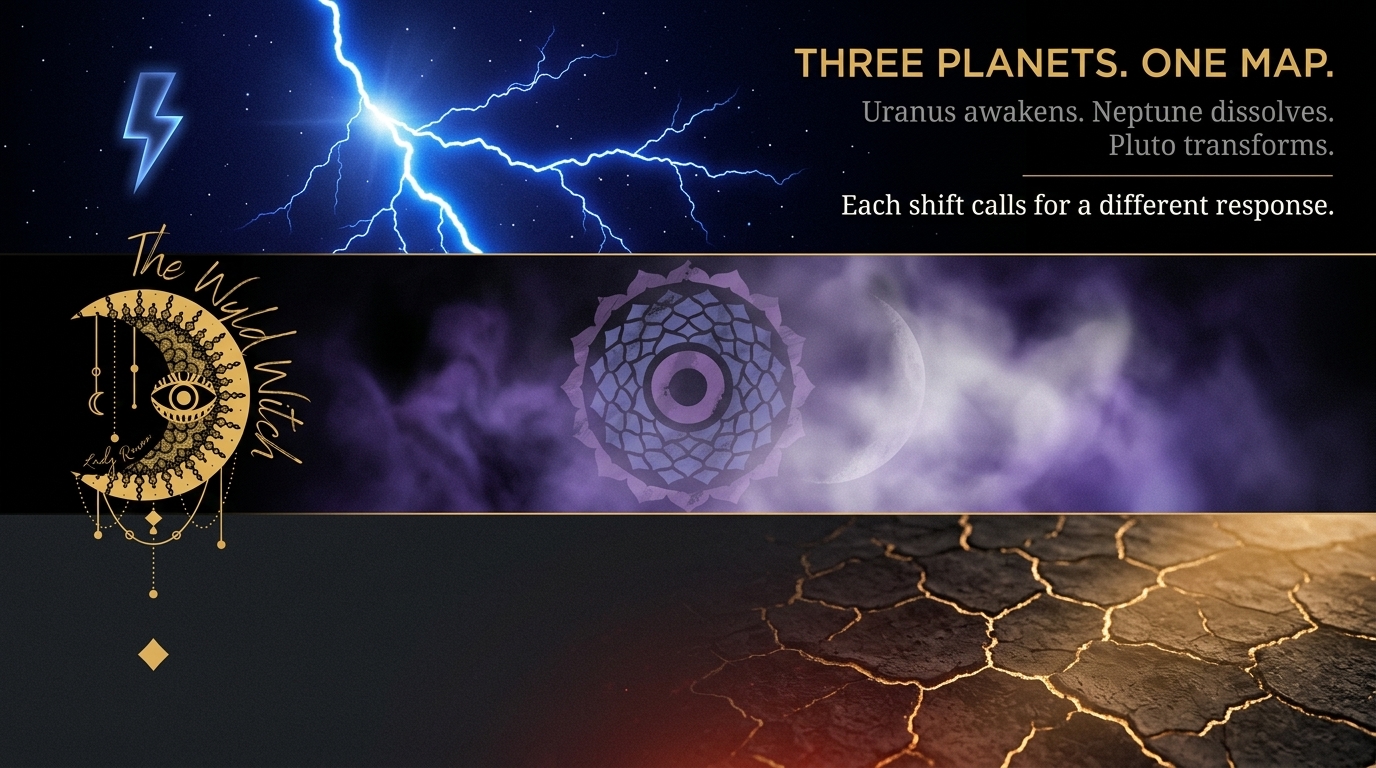

Most people think the outer planets are just astrology’s version of trouble — Uranus the wildcard, Neptune the fog machine, Pluto the wrecking ball. It’s more than that. In evolutionary astrology, every outer planet carries two faces: a shadow expression, which shows up when the energy is running unconsciously, and a gift expression, which shows up when you’re actually working with it. The planet itself doesn’t change. What changes is how awake you are to it.

That distinction matters more with the outer planets than almost anywhere else in the chart. Unlike your Sun or Moon, Uranus, Neptune, and Pluto move so slowly that their sign placement is shared by everyone born in the same several-year window. They’re not just personality markers — they’re soul-level material, generational undercurrents that get personalized by the house they land in and the aspects they make in your own chart. So when we talk about a “shadow” here, we’re not talking about a character flaw. We’re talking about unresolved soul material that hasn’t been consciously met yet — which is exactly why the same planet can look so different from one person to the next.
Uranus: Awakening or Alienation
In shadow, Uranus doesn’t liberate — it isolates. It can look like rebellion for its own sake: picking a fight with convention to prove you’re not like everyone else, or treating disruption as a personality instead of a purpose. Unconscious Uranus burns bridges and calls it authenticity.
The gift is something else entirely. Claiming your right to be yourself is the real soul of this planet — not shock value, but genuine individuation: the willingness to think for yourself, act on a real insight even when it’s inconvenient, and let a breakthrough actually change your direction instead of just your mood for a week. Uranus at its best doesn’t need an audience. It just needs you to stop performing normal long enough to hear what you actually think.
Neptune: Transcendence or Escape
Neptune’s shadow is one of the easiest to mistake for spirituality, because it can look so peaceful from the outside. Drift, denial, numbing out, losing yourself in something outside you instead of turning toward what’s actually happening in your life — all of it can wear a soft, harmless face. Spiritual bypassing lives here too: using enlightenment language to avoid a hard conversation you actually need to have.
The gift is real transcendence, not an exit from reality but a dissolving of the false boundary between you and everything else — genuine compassion, creative surrender, the kind of connection that comes from facing what’s true rather than floating above it. Neptune’s evolutionary work is learning the difference between escaping a feeling and actually moving through it. One numbs. The other opens something.
Pluto: Transformation or Control
Unconscious Pluto grips. It shows up as compulsion, obsession, buried rage that leaks out sideways, or a white-knuckled need to control what can’t actually be controlled. Shadow Pluto would rather clutch the old, familiar pain than risk the unknown of letting it go — even when the old pain is the thing keeping you stuck.
The gift side is transformation in the fullest sense: the willingness to look directly at what’s true, even the parts of yourself you’d rather not claim, and let that honesty become the thing that changes you. Pluto doesn’t ask you to be comfortable. It asks you to be real — and real is where your actual power lives, not in the control you thought you needed.
The Point Isn’t to Avoid the Shadow
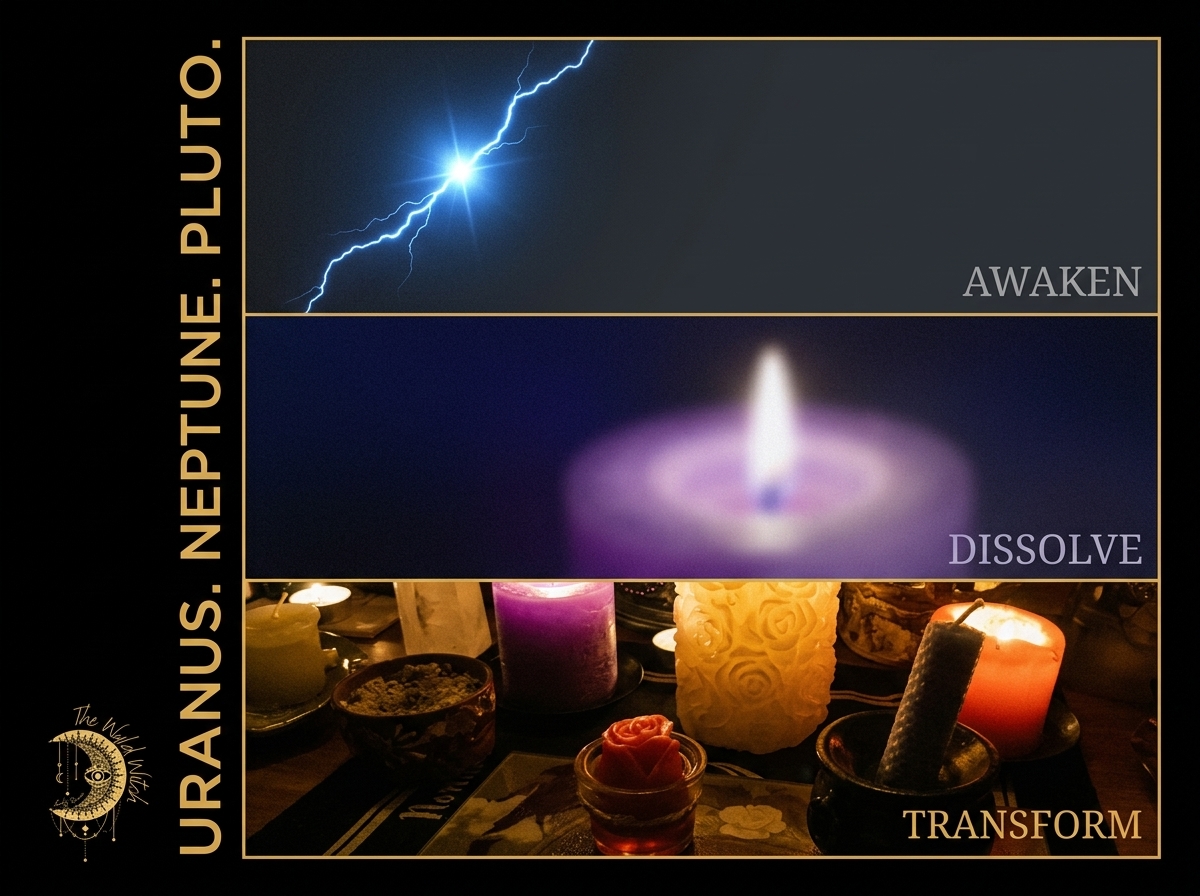
Here’s what ties all three together: the shadow isn’t something to eliminate, and it isn’t a punishment for having a hard placement. It’s the raw, unrefined version of the gift — the same energy, before consciousness has had a chance to work with it. That’s the whole choice-centered heart of evolutionary astrology. The planet doesn’t decide which face you live from. You do, one choice at a time.
Raven encourages you to sit with your own Uranus, Neptune, and Pluto placements and ask which face has been running the show — and whether it’s time to meet that energy differently.
How a Reading Can Support You Through a Spiritual Awakening
A spiritual awakening rarely announces itself politely. It tends to show up as everything you thought you knew coming loose at once — old beliefs stop fitting, past comforts stop working, and the ground you were standing on gets soft. Uranus and Neptune are usually somewhere in the middle of this, and an evolutionary astrology reading can show you exactly where.
Instead of wondering why your whole life suddenly feels like it’s dissolving or waking up all at once, you get to see the actual placements and transits doing that work, and where they’re pointing you next. Raven finds that clients moving through an awakening don’t need someone to talk them out of what they’re feeling — they need a map that confirms it’s real, shows them the shape of it, and points toward what’s waiting on the other side.
How a Reading Can Support Your Shadow Work
Shadow work without a map tends to circle the same territory over and over, because it’s hard to know which pattern is actually load-bearing and which is just noise. A chart reading changes that. Pluto, Chiron, and the harder aspects in your chart aren’t random — they point to the specific wound your soul came into this life to work with, not a list of flaws to feel bad about. Reading a chart through this lens turns shadow work from a vague self-improvement exercise into something far more precise: here is the actual pattern, here is where it came from, and here is what it’s asking you to do with it now. That’s the difference between working on yourself in the dark and working on yourself with the lights on.
Ready for Your Own Reading?
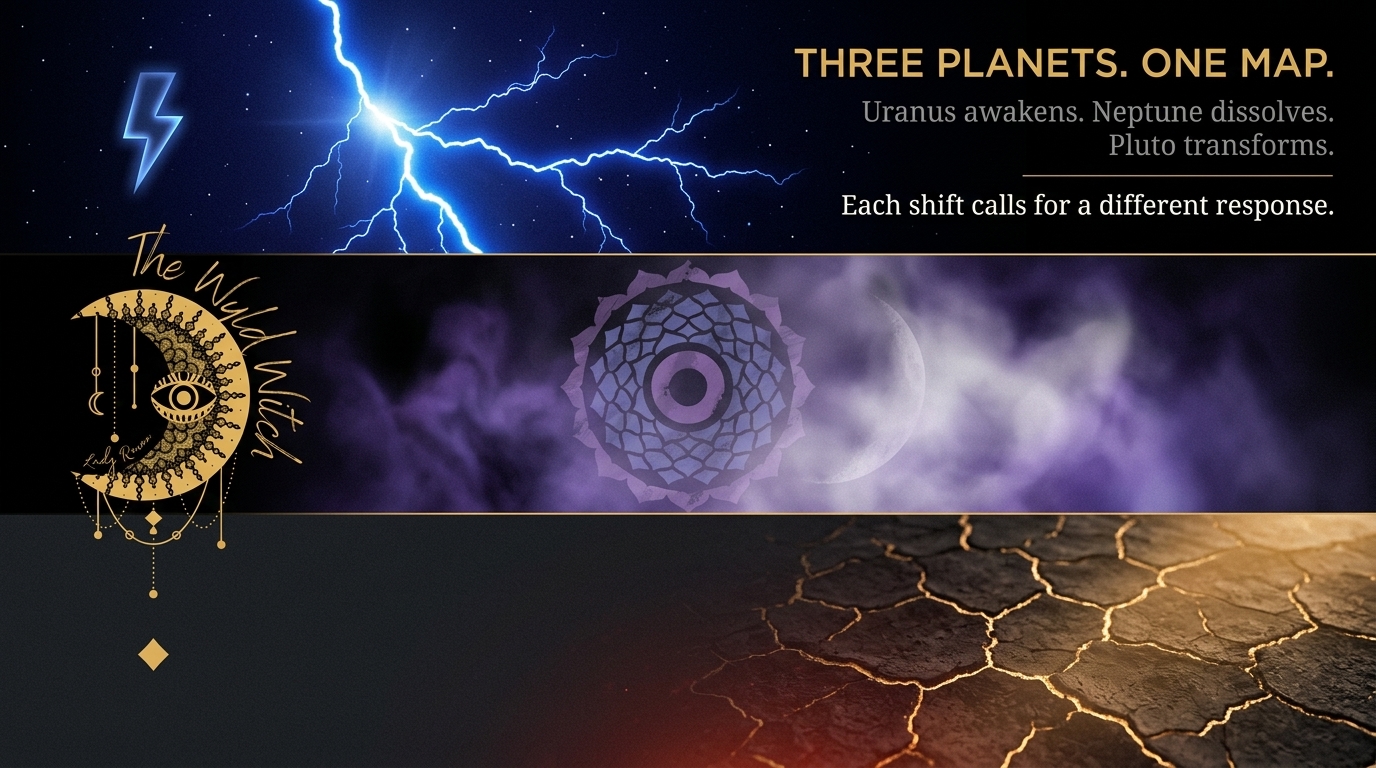
Everything above describes how Uranus, Neptune, and Pluto tend to work — but your chart is where it stops being general and starts being specifically yours. Raven offers evolutionary astrology readings that map these outer planets directly onto your own placements, houses, and aspects, so instead of wondering which face of Uranus or Neptune or Pluto is active in your life, you get real, personal insight into what’s happening and what it’s asking of you. If you’re moving through an awakening, working through something in the shadows, or just ready to understand your own chart at this depth, a reading is where that clarity actually starts.
Go Deeper: Steven Forrest’s Work
If you want to go further into this tradition, Steven Forrest is the teacher whose work this entire framework builds on. His site, forrestastrology.com, is the best home base for his books, courses, and articles. For Neptune specifically, his book The Book of Neptune is a full deep dive, and The Book of Pluto: Finding Wisdom in Darkness with Astrology does the same for Pluto.
There’s no standalone Uranus title, but his audio class Uranus in the 12 Signs covers similar ground. The Forrest Center for Evolutionary Astrology also published a piece called “An Integrated View of Uranus, Neptune and Pluto” that pairs well with everything above.
Frequently Asked Questions
What does Uranus mean in astrology?
Uranus represents awakening — but its evolutionary meaning depends on whether it’s running as shadow or gift. Unconsciously, it can show up as rebellion or disruption for its own sake. Consciously, it’s the planet of real individuation: claiming your right to be yourself and acting on genuine insight.
How do Neptune transits affect me?
Neptune transits can bring a foggy, dissolving quality to whatever they touch — and how that lands depends on how you meet it. Met unconsciously, it can pull you toward escapism or spiritual bypassing. Met consciously, it opens real compassion and a genuine sense of connection beyond the ego.
What is Pluto’s role in transformation?
Pluto marks the parts of you that are ready for big, honest change. In shadow, that pressure can show up as compulsion or a need for control. Worked with consciously, it becomes the doorway to real transformation — facing what’s true and letting that truth reclaim your power.