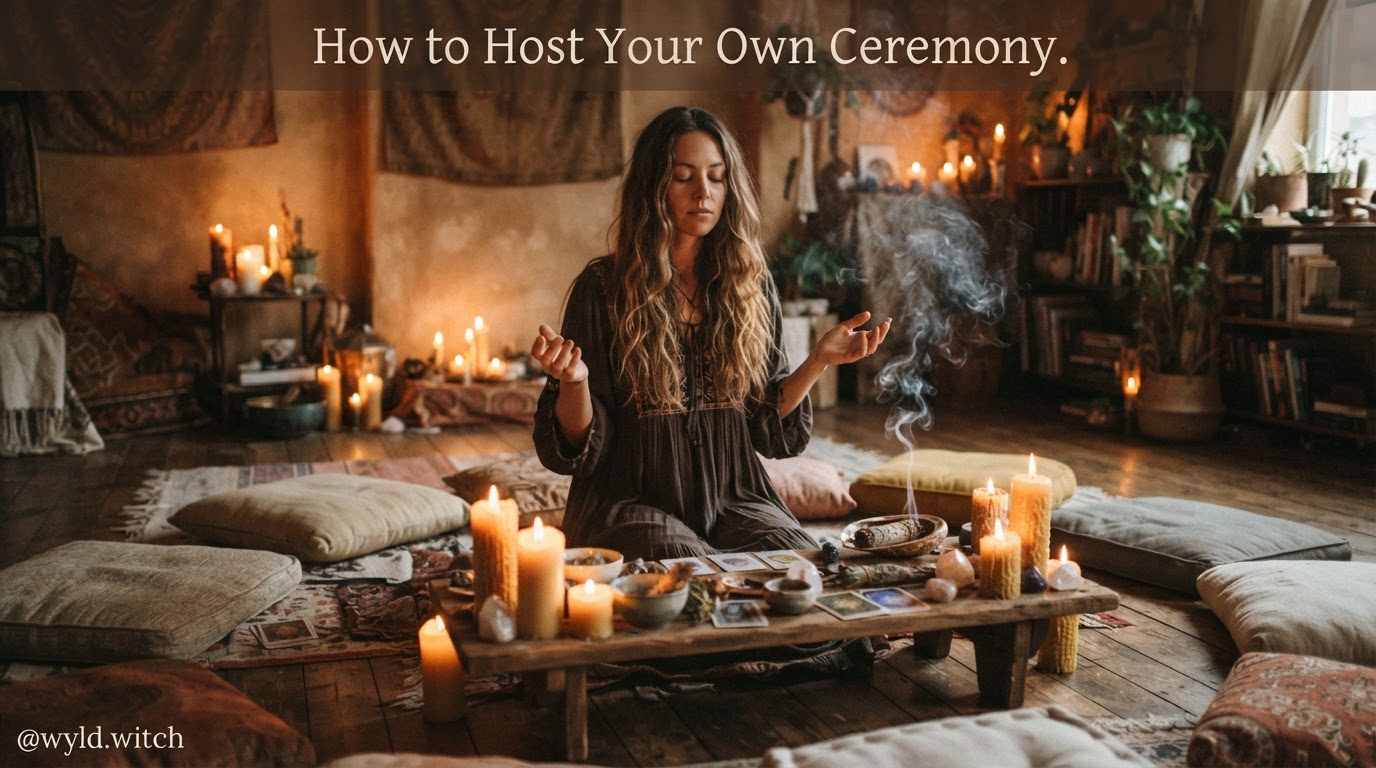
Ceremony isn’t reserved for trained shamans and decades-deep practitioners. Almost anything can become a ceremony once you hold it with the right intention and structure — a meditation, a Reiki circle, a talking circle, a drum circle, whatever calls to you. But hosting one responsibly takes real understanding of what you’re stepping into. Here’s how to build that, one layer at a time.
Start Where You Actually Are
The most important thing to understand before you host anything is this: match your experience level to the ceremony you’re hosting. Don’t reach for something bigger than what you’re actually ready to hold.
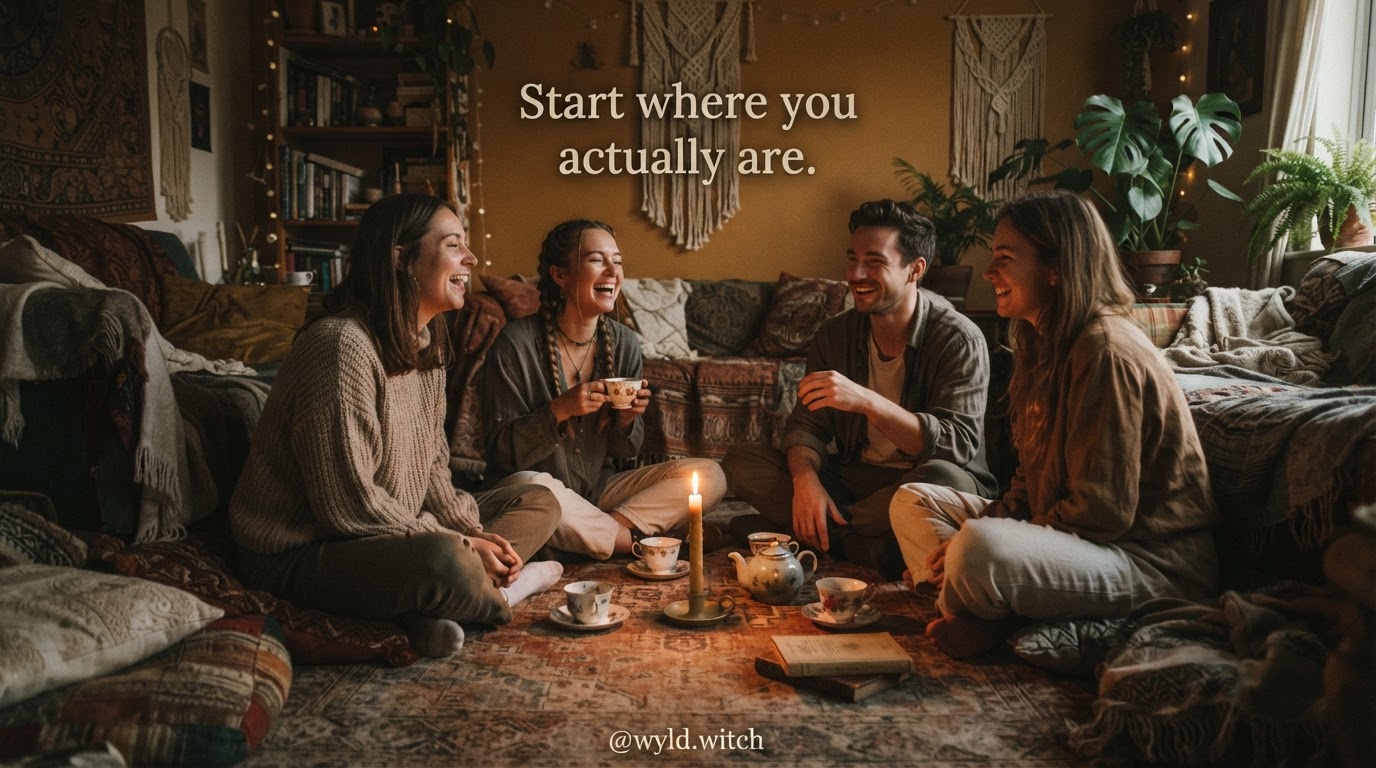
That doesn’t mean you need years of training before you can start. A casual friend circle — no oaths, sacred space optional, low stakes — is a completely legitimate place to begin. In fact, it’s genuinely valuable training ground. In a space like that, you get to participate right alongside everyone else. You can have your own breakthroughs. You’re building the muscle of holding space without yet carrying the full weight of it.
From there, go experience ceremonies held by other facilitators — as many different styles as you can. This does two things: it shows you the real range of what’s possible, so you’re not just copying the one approach you happened to learn first, and it lets you notice, as a participant, what actually lands and what doesn’t.
Somewhere in there, look for someone to train under, or workshops that teach ceremony facilitation directly. And through every stage of this — friend circle, attending, training — hold onto one boundary that never moves:
You are the facilitator, not a participant. You can share right alongside people. But ceremony is not the place for you to process your own feelings, your own emotions, your own anything. The reason is simple and important: if you’re busy processing your own experience, you don’t have the space to hold anyone else’s. People come to a ceremony you’re hosting specifically so they have room to process — and that room comes from you.
This holds especially true if the ceremony involves a meditation or shamanic journey. As the facilitator, you don’t go on the journey yourself. Your job in that moment is to keep watch over your participants — to make sure they’re doing well while they’re under, and that they come back fully and completely into their bodies when it’s done. You can’t do that if you’re off on your own journey at the same time.
One more caveat here, and it’s an important one: if you don’t yet know how to go retrieve someone who gets stuck in a shamanic journey, don’t bring shamanic journeying into your ceremonies. It happens, and when it does, you need to actually know how to help that person find their way back. If that’s not a skill you have yet, leave journeying out of what you’re offering until it is. If it’s a skill you want to build, look for a shamanic mentor and ask if they’re willing to teach you — this isn’t something to learn on the fly, in the middle of someone else’s ceremony.
Choose What Kind of Ceremony You’re Building
Once you’re ready to actually host, the first real decision is what kind of ceremony you want to hold. A meditation. A Reiki healing circle. A women’s circle or talking circle. A drum ceremony. There’s no single “correct” format — almost anything you can think of can be built into a ceremonial container, as long as you hold it with real intention.
What Your Job as a Host Actually Is
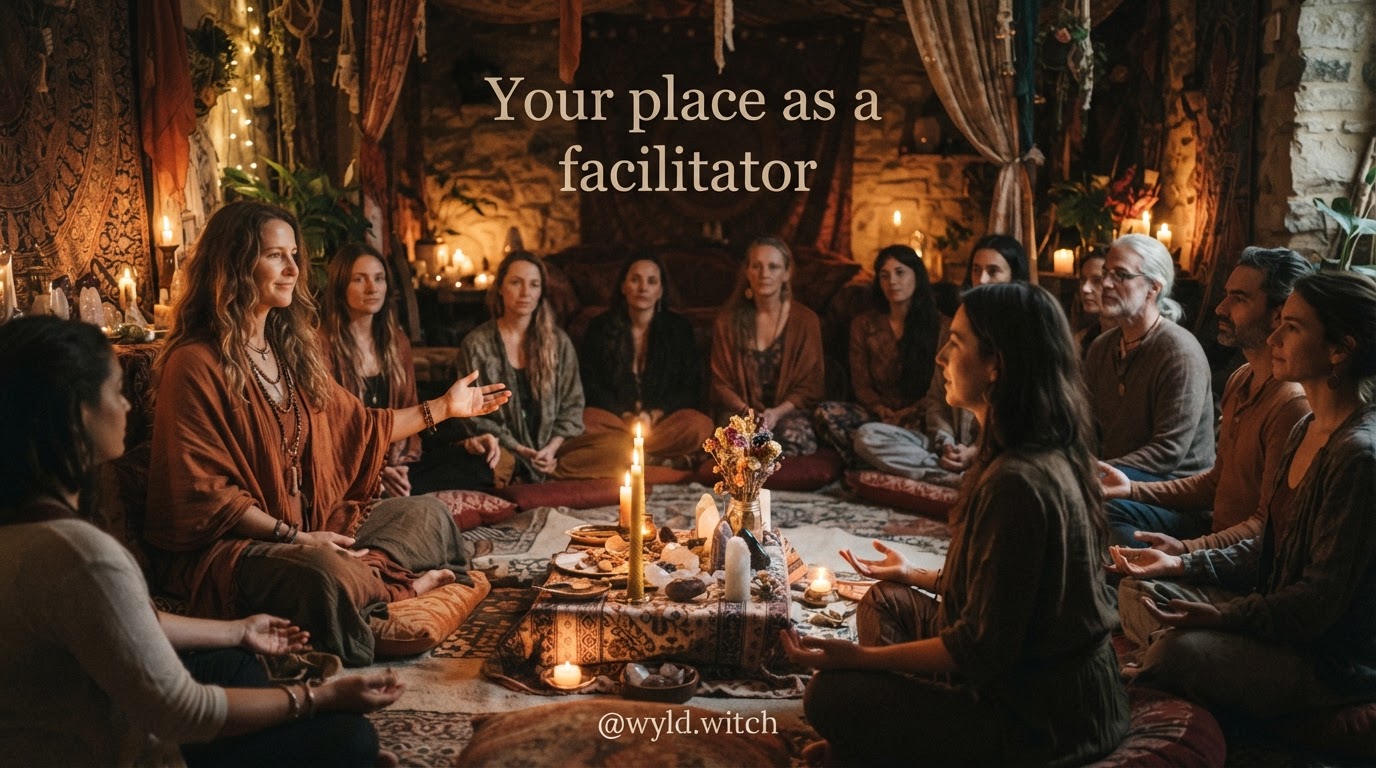
Before you build anything else, understand what you’re actually there to do. You’re hosting sacred space, and part of that is mediating the conversation happening inside it. In practice, that means making sure no one hogs all the space, and making sure no one goes unseen.
The quiet ones. Some participants will sit back and simply listen the whole time — and that’s a completely valid way to participate, if that’s genuinely what works for them. But often, what a quiet person is actually looking for is an invitation. If you notice someone hasn’t added anything, turn to them gently: “Hey, I’ve noticed you’ve been quiet — do you have anything you’d like to add?” They might shake their head no. They might just say they agree with what’s already been said. Either answer is fine. What matters is that you asked, and that you brought them into the circle rather than letting them stay invisible by default.
The energy wellsprings. This is the trickier situation, and the more important one to understand. Some participants are like an old faithful spring — instead of water, what they’re constantly spewing is energy. They tend to be loud, want to be the center of attention, and talk more than their share. Often, they’ll try to fixate on giving advice to one particular person in the circle, over and over, well past the point where it’s actually helpful.
It’s worth holding a little compassion here, too: a lot of the time, this isn’t conscious. It’s often tied to someone’s own trauma, or whatever their shadow ego is putting out into the room, and they may not have any real awareness that they’re doing it at all. That doesn’t mean you let it go unmanaged — the circle still needs protecting — but it’s not usually malicious, and it doesn’t have to be treated that way.
As the host, you’re managing this on two levels at once. Energetically, if it’s clear someone can’t contain their own excess energy, it becomes your job to quietly ground that extra energy for them. Verbally, redirect firmly but without being unkind: “Let’s give someone else a chance to speak.” If someone keeps circling back to advise the same person again and again, it’s fair to step in: “Let’s take a step back now and give them a chance to sit with what they’ve already heard.”
Watch for sketchy practitioners hunting for clients. This is a different problem entirely, and it isn’t unconscious — it’s a choice. Some people who show up to circles aren’t there for the ceremony at all; they’re there to find clients for their own services. Inside the circle, this can look like using the space to sell or promote their own services, which can genuinely feel like an intrusion, even an energetic attack, to the people around them. If it happens, redirect it plainly: “This isn’t the place to offer your own services — we’re here for this circle.” You can’t control what happens once the ceremony ends and people start milling around, but inside the space you’re holding, that behavior is yours to manage and shut down.
Let each person’s experience stay theirs. It’s up to each participant to make their own meaning from what they experience — not up to you, and not up to anyone else in the circle. If someone is struggling to understand something and you genuinely have an insight that might help, you can offer it, but only after they’ve already shared their own understanding first, and only framed as an offering, not an answer: “Here’s a thought, something for you to consider,” never “this is what it means.” If you don’t have an insight, it’s completely fine to say so, and let them sit with it themselves.
Honor whether they wanted feedback. Remember what each person said during introductions about whether they wanted feedback or simply wanted to be witnessed. That needs to be respected fully once they share, by everyone in the circle — including you as the facilitator.
If someone starts to cry, no one touches them — not even you. This is one of the most common instincts to override, and it’s not just about you as the host. It’s easy to see someone get up from across the room and go comfort a person who’s crying, and that instinct, however well-meaning, usually needs to be stopped. When someone gets emotional, the impulse is to go comfort them, often through touch, to help them stop. Resist that, and don’t let others in the circle act on it either. The crying itself is the release — it’s their process, happening exactly the way it needs to. They’re already being supported simply by being held in the circle; nobody needs to touch them for that support to be real. Let them cry until whatever needed to move through them has moved all the way through, rather than helping them stop early.
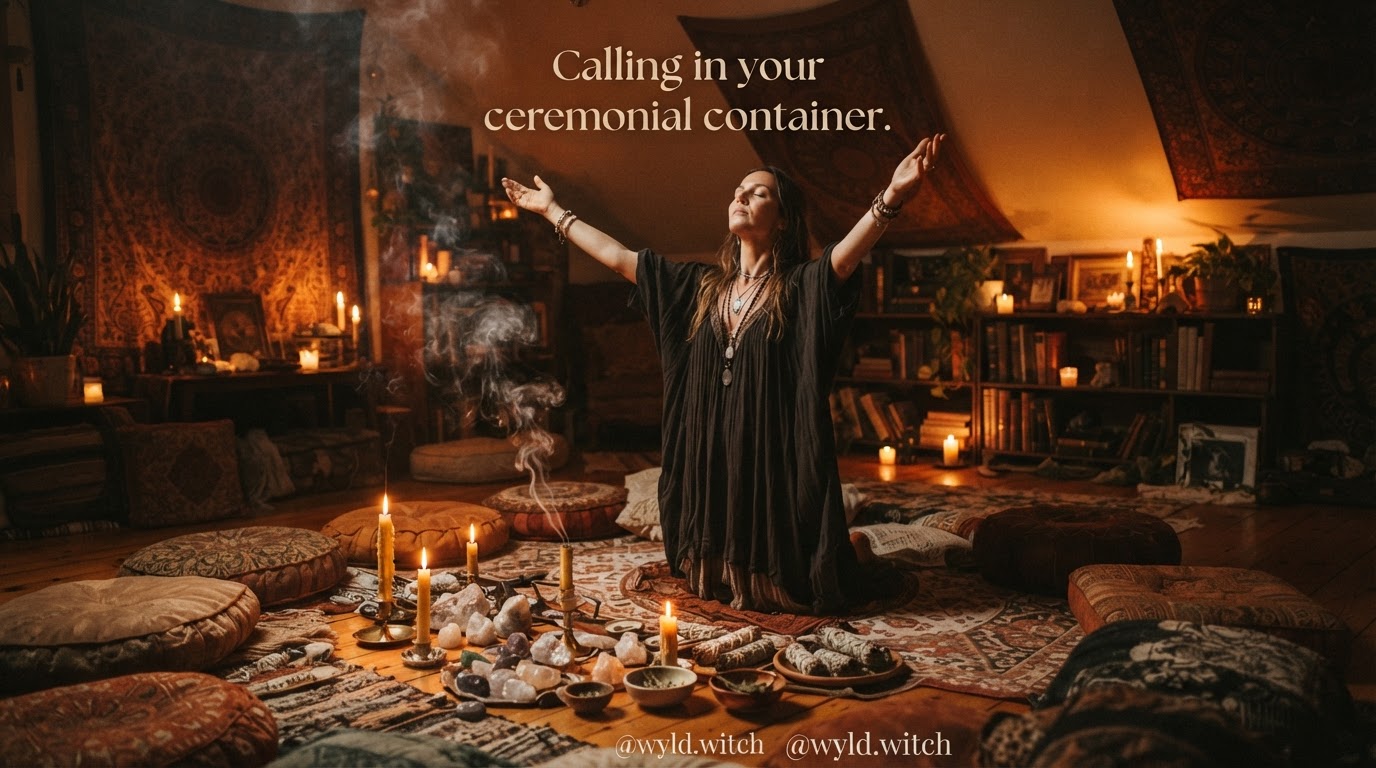
Part One: Calling In Your Ceremonial Container
This happens before anyone arrives. It’s yours alone.
Start by cleansing the space — wherever you’re hosting, whether it’s a rented room or your own living room. Use whatever method genuinely resonates with you: a vibrational cleanse, smoke clearing, salt water, even a ritual sweep with a broom. There’s no single right way to do this part.
Then call in the seven directions. This is a fuller version of the traditional four quarters — one that brings the whole human being, body and spirit, into the container:
- East — the mental body. Call in an open mind, creativity, intuition, free-flowing thought. Ask for the ability to receive epiphanies, and for those epiphanies to keep unfolding even after the ceremony ends.
- South — the emotional body. Call in love, trust, and gentleness. Ask that each participant receive whatever energy they need in a way that feels safe, and that hearts stay open enough to receive it.
- West — the physical body. Ask that the vibration of the ceremony stay held in the body itself — so that even if something isn’t needed today, it remains accessible for whenever it is needed later.
- North — the spiritual body. This is the direction of release. Call in cleansing, the purity of spirit that comes from letting go — asking that whatever no longer serves each person, whatever has been holding them back, be given permission to leave here, making room for new opportunities and new insight to take its place.
- Up above. Call in your own spiritual guides — to oversee the ceremony, to keep you stable, to help you act as a hollow bone: a clear channel that receives and passes along what’s needed without adding your own spin to it. Ask them to keep your ego in check.
- Down below. Call in your earth and plant allies — Mother Earth herself, animal spirits, plant spirits, crystal spirits — to provide the healing and support the circle will need.
- Within. For those just starting out, this can be kept simple: call in each participant’s full power and sovereignty, returned to themselves, at the center.
As you call each direction, load the container with the specific intention of that day’s ceremony. If you’re hosting a women’s circle, ask that everyone be able to speak openly. If you’re hosting a drum ceremony, ask that the space hold the medicine of the drum, and that everyone feel its beat and the shifts it causes within them. You’re not reciting something generic — you’re building the exact container this specific ceremony needs to succeed.
Welcoming Your Participants
Once people arrive, open with introductions. Have each person speak their name into the circle, why they’re there, and what they hope to receive or explore that day. This is also the moment to have each person share whether they’d like feedback on whatever they experience during the ceremony, or whether they’d simply like to be witnessed without anyone weighing in. Getting this stated up front, before anything else happens, means everyone in the circle already knows how to hold space for that person once it’s their turn to share.
This is also the right moment to set one more ground rule out loud: if someone becomes emotional or starts to cry during the ceremony, no one gets up to go comfort them, including you. Each person needs to be free to process their emotions however they need to, without anyone crossing the room to intervene. Stating this clearly at the start means no one is caught off guard by it in the moment, and no one feels like they’re being cold by staying in their seat.
On the surface, this looks like people simply introducing themselves to the group. What’s actually happening is deeper: each person is speaking their own intention into the container you already built, weaving themselves into it. Then walk them through what the ceremony will actually involve, and open space for questions before you begin.
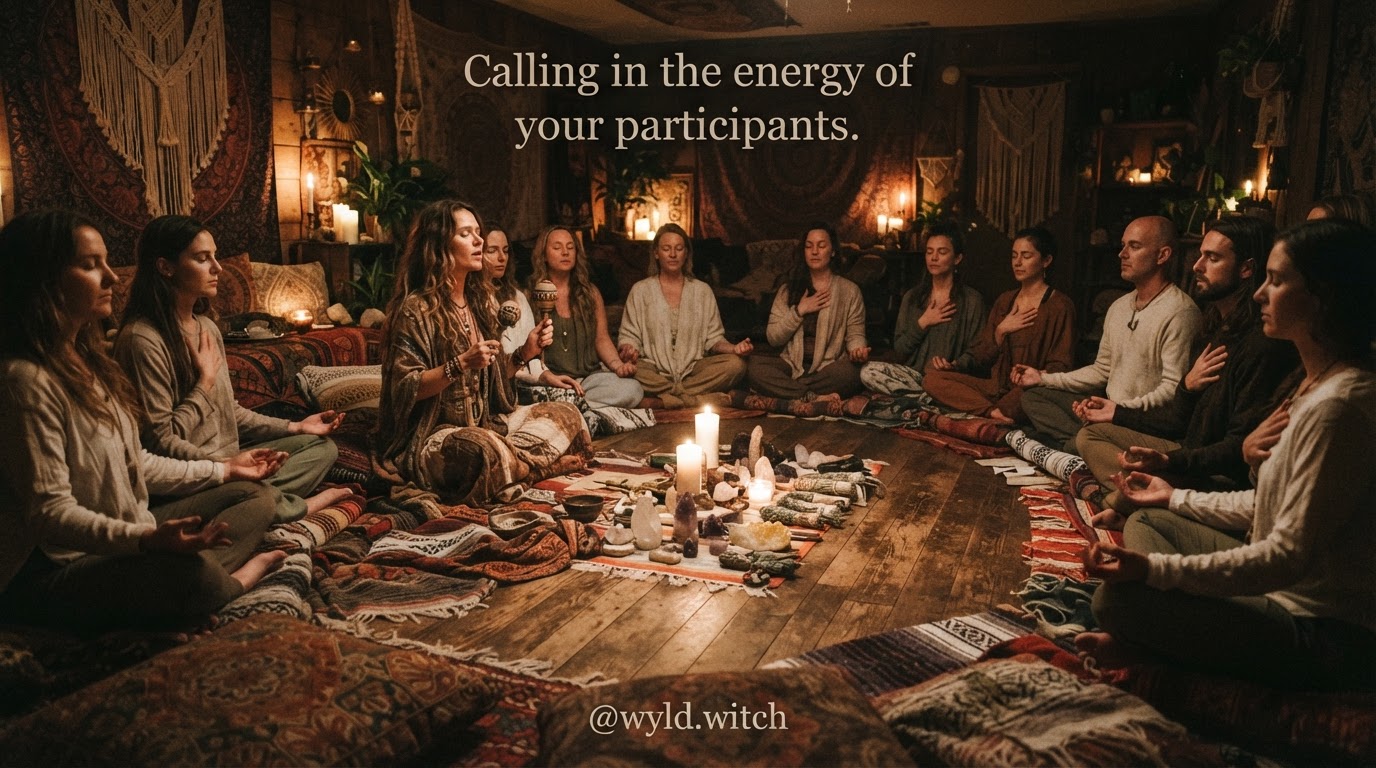
Part Two: Calling In the Energy of Your Participants
This is different from the container you called in alone — that one stays yours, and only you control it. This second calling happens out loud, with everyone present, and it draws each participant’s own energy and guides into the circle around them.
Move through the same directions again, this time speaking them aloud for the group:
- East. Ask that every participant’s mind open to receive from each other, to their own insights — spoken aloud so the group can hear it and start settling into that state together.
- South. Ask for open hearts — trust, love, growth, the ability to share and receive, to find peace.
- West. Ask that everyone hold onto this vibration, so it remains accessible even if it isn’t needed today.
- North. This is the direction of release, spoken aloud for everyone present. Ask that whatever no longer serves each participant, whatever has been holding them back, be given permission to leave here in the circle rather than going home with them — making room for the new opportunities and insight they came here to receive.
- Up above. Call in the spirit guides and protectors of every single participant present. Welcome their wisdom, their participation, their willingness to be present with their person today.
- Down below. Ask Mother Earth to steady the space and hold everyone in her embrace. Call in the plant spirits, animal spirits, crystal spirits — every spirit that has ever walked the earth — to offer healing and support through the ceremony.
- Within. Call in each piece of every participant — across past lives, future lives, alternate existences — into this moment, so that the healing received reaches the whole person, not just who they are today.
Here’s the key distinction to hold onto: the outer container is entirely yours to command. If something shows up that doesn’t belong — a spirit that’s out of line, energy that doesn’t serve the space — you’re the one who notices, and you’re the one who removes it. The inner circle, called with your participants present, is where their actual healing happens.
Hold the Ceremony
Now you move into whatever the ceremony itself is — the meditation, the drumming, the sharing, the healing work. This part is shaped entirely by what you chose to build, and it’s genuinely yours to design.
Releasing the Circle
When the ceremony content is finished, release the second circle — the one called around your participants. This moves quickly, not direction by direction the way the calling-in did. Group it into two parts: the horizontal directions together, then the vertical directions together.
First, give thanks to east, south, west, and north all at once — for holding space for the mental, emotional, physical, and spiritual work that happened, and release them together.
Then move to the vertical directions. Thank the spirit guides who came forward in the up above for their wisdom and presence, and release them. Thank the earth and plant allies in the down below for their support and healing, and release them. And pay special attention to the within — this is where you release each piece you called in, sending everything back to its proper timeline, its proper existence, asking that the healing received here ripple outward across the whole being, in every life it touches.
Let people say their goodbyes. Hugs, closing words, whatever feels right.
Releasing Your Ceremonial Container
Once everyone has left, release the outer container you called in alone at the very beginning. This can move faster than the participant release — a simple, sincere thank-you and release to each direction, the four quarters, the up above, the down below, and the within, thanking every guide and ally who held that space with you.
Then, deal with whatever’s left behind. Whatever residue or heavy energy was released during the ceremony is still sitting in that container — this needs to go somewhere real, not just linger. Some practitioners open a portal and send the energy out that way, but that’s a more advanced technique. When you’re starting out, simply pushing that energy down and returning it to Mother Earth for recycling is enough, and it’s the safer choice while you’re still building experience.
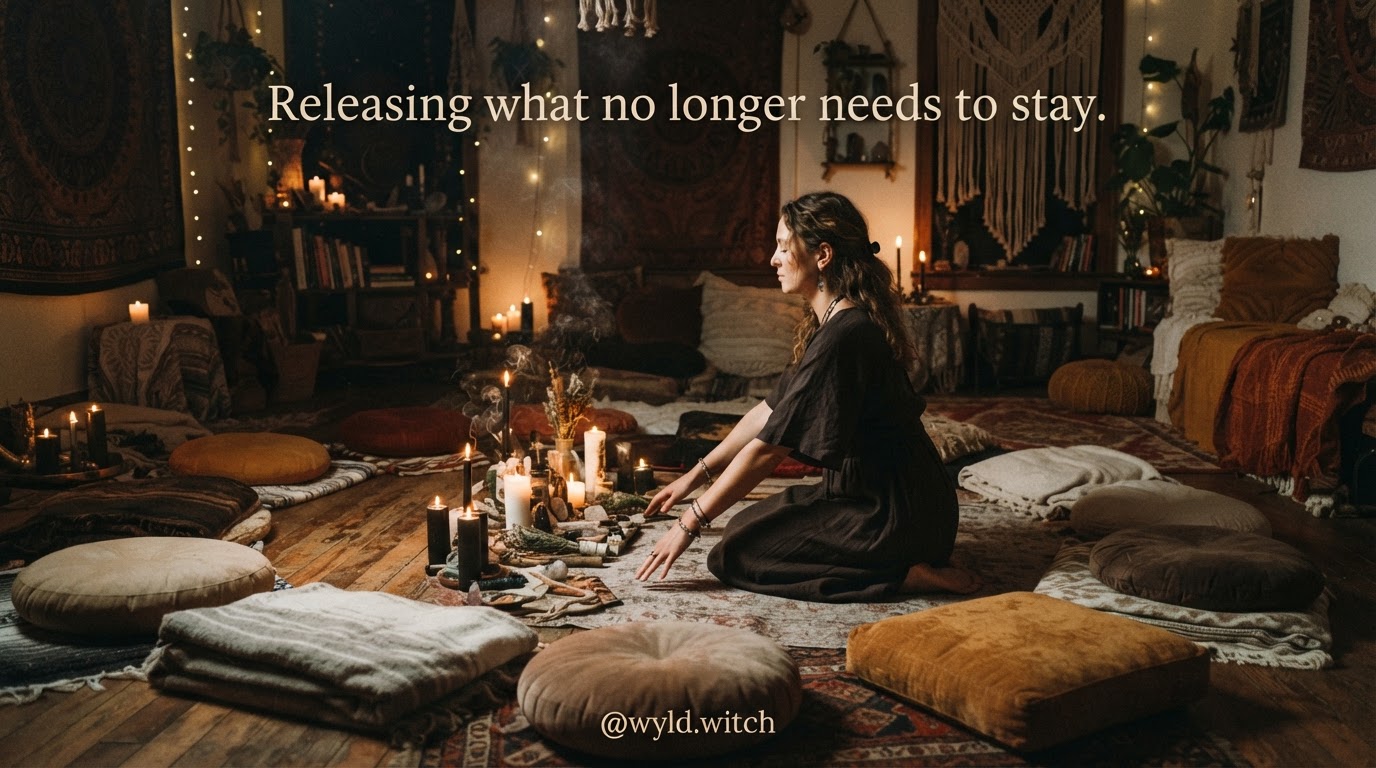
Once that’s done, your ceremony container is open, and the space — and you — are clear.
This Is a Practice, Not a Performance
None of this needs to be perfect the first time you try it. What matters is that you understand what you’re building, that you respect the weight of holding space for other people, and that you know how to close what you open. Start small. Build from there. The container will get steadier every time you call it in.