In my last post, I talked about the three worlds I journey to in my own shamanic practice. This post is about a question I get asked often and a mistake I see people make too often: what is the actual difference between meditating and taking a shamanic journey? Meditation and Journey are not the same thing. In one, you are sitting in the middle world waiting for things to come to you (even on guided meditations). In a shamanic journey, you descend into the lower spirit world to connect with spirits. Both should have a place in your practice as both of them have great benefits!
Meditation has real, healthy uses, and I want to give you two you can try right now.
A Peace and Calm Meditation
Get comfortable, seated or lying down, and close your eyes. Breathe in slowly through your nose, hold for just a moment, then breathe out slowly through your mouth. Do this a few times, just letting yourself settle.
Now bring to mind a place that feels calm and safe to you. It can be real or imagined; it does not matter which. Let yourself notice the details there, what you see, what you hear, maybe a temperature or a breeze. Stay there for a few minutes, just breathing and noticing. When you are ready, gently bring your attention back to the room.
A Body Sensing Meditation
This one is sometimes called progressive muscle relaxation. Start the same way: comfortable position, eyes closed, a few slow breaths to settle.
Then move through your body group by group, starting at your feet. Tense the muscles there for a few seconds, then release, and really notice the difference between the tension and the relaxation. Move up to your calves, same thing: tense and release. Then your thighs, then your stomach, then your hands and arms, then your shoulders, then your face and jaw. By the time you have worked all the way up, your whole body should feel loose and heavy in a good way.
Both of these are wonderful tools for calming the nervous system and the mind. But notice that neither one asks you to go anywhere, or to receive anything from outside yourself. That is the difference we are building toward.
Where Meditation and Journey Part Ways
The uses of meditation I just described, and many others like them, are ones I fully support. The place I part ways with how meditation gets used is when people try to use it to receive information from their spirit guides.
Here is the problem. When you sit still and let messages come to you, you run into the same issue I described with the middle world in my last post. You are not choosing where you are going or who you are hearing from; you are simply leaving the door open for whatever happens to be nearby. And just like in the middle world, you may not be able to tell the difference between a genuine guide and something that is simply telling you what it thinks you want to hear.
A shamanic journey works differently. In meditation, you stay where you are, and things come to you. In a shamanic journey, you actually go somewhere; you travel into the spirit world to seek out what you are looking for. That distinction, staying put versus deliberately traveling, is the heart of the difference between the two practices.
You Have to Know What You’re Looking For
Here is a mistake I see often. Someone journeys and comes back saying nothing happened; they did not receive anything. Almost always, this is because they went in without a clear question. They said something like “Tell me what I need to know” or “Give me a message,” and left it at that.
Spirits do not have time for that kind of vagueness. If you do not know what you are looking for, they will simply tell you to come back when you do. Before you embark on your journey, you need to know what you are actually searching for. That clarity of intention is not optional; it is the whole skill. Arriving with a real question is what makes the journey work.
Meditation is a wonderful practice, and I hope you try the two above. Just remember what it is for, and what it is not for. When you are ready to actually travel into the spirit world and ask a real question, that is a different practice altogether, and one worth learning properly.
Setting the Sound
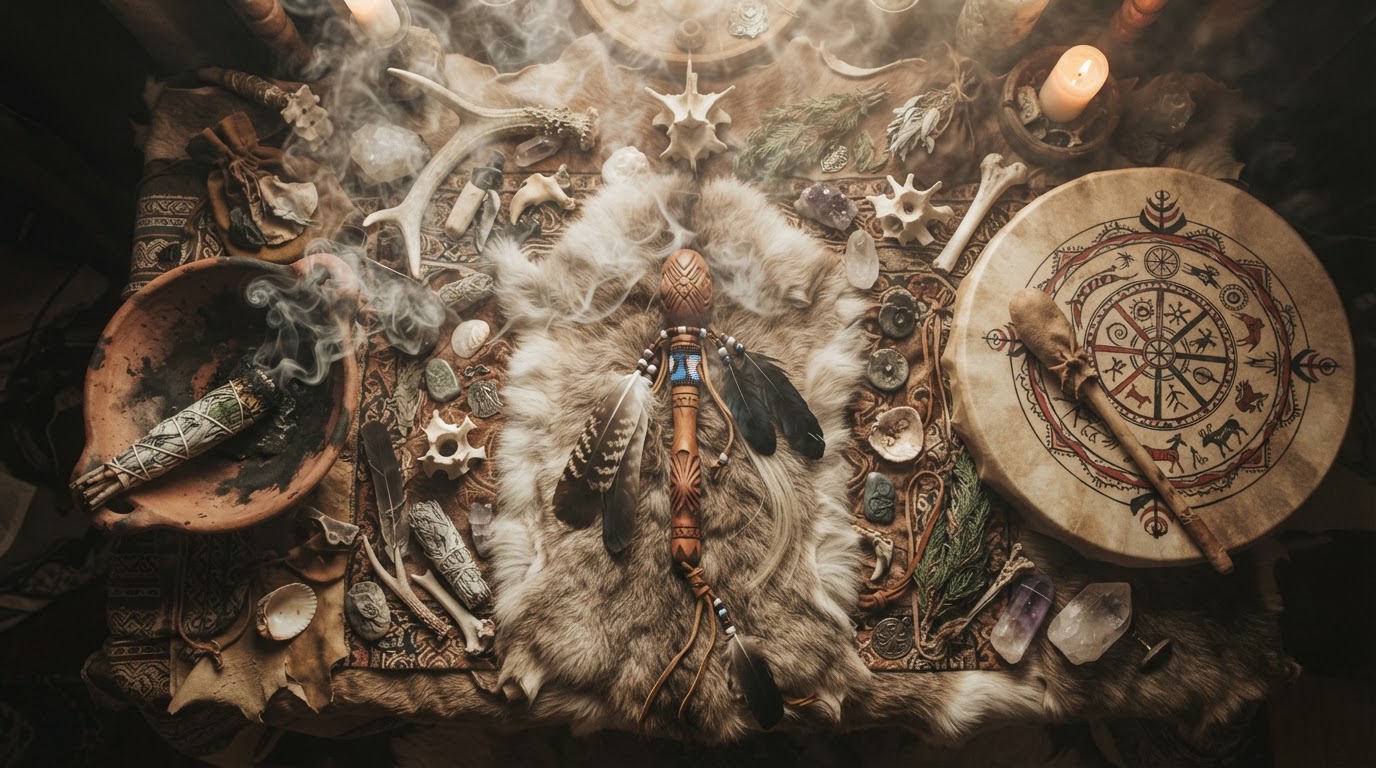
Before you journey, you need sound, either drumming or rattling. One of the best ways to start is with a recorded drumming track. You can find plenty on YouTube, or download one through a music service if you have one. Whichever you choose, listen on headphones, so you can actually feel the beat of the drum move through your entire body, not just hear it.
The same goes for a rattle journey. I am partial to drumming myself, but some people do not respond to it, and rattle journeys work much better for them. Either one is valid. What matters is that you feel it, not just hear it.
Know Your Question Before You Go
As always, before your journey, you need an intent. A good question is specific and asks for definite guidance. Should I move from California to Idaho? I am thinking about getting married; is this the right person for me? I am thinking about graduate school; should I do that, or should I go into the workforce first? Those are all good questions; they are specific, and they ask for a real answer.
Understanding your purpose and goal before you go in is the first important step in your journey.
Spirits Speak in Metaphor
Here is the tricky part: spirits often respond to you in metaphors, and learning to understand the metaphor is the real skill. Say you ask whether you should go to graduate school or go into the workforce. You journey, and you meet an animal who hands you an egg. That egg is your answer.
An egg is something you nurture, something you help grow into its full form. To me, that interpretation points toward graduate school; this is a time to keep nurturing, to keep building on what you already have, rather than heading straight into the workforce, where you are simply moving forward rather than continuing to grow something. Going to grad school means deepening your connection to what you are learning, nurturing it until it is fully grown and ready to go out and do the work of an adult.
A Journey With My Polar Bear
Sometimes metaphors are not easy to understand right away. I want to share a journey I actually had with my polar bear spirit animal. At the time, I had two practices going, my shamanic practice and my witchcraft practice, and I felt torn in two. I believed I had to be one or the other, that there was no in between, and I was struggling with how to adapt and change those practices to fit together.
I went to see my polar bear in journey. He kicked me straight into Arctic waters. I was freezing, and I told him so. He said one word back to me: adapt. As I sat in that water, I noticed I started growing fur, not becoming a polar bear myself, but growing polar bear fur that kept me warm. When I tried to paddle, and my hands would not work well on their own, they grew into paws so I could paddle properly. Everything else- my face, my hair, the rest of me- stayed exactly as it was.
Here is what that meant for me. I did not need to practice pure shamanism or pure witchcraft. I could take the pieces of each practice that served me and incorporate them into my own. My final practice was never going to be purely witch or purely shaman; it was going to sit somewhere in between, whatever that felt like to me, unique to my own path. Just like in the water, I did not need to fully transform into something else. I only needed to grow the specific tools I needed, fur for warmth, paws for paddling, while staying myself underneath it all.
Nothing Is Literal
This is the part that makes up most of the real work of journeying: interpretation. Nothing you receive in the spirit world is literal. If a spirit hands you a box with a gift inside, that gift is not a physical object; it is a metaphor for whatever they are actually giving you. If instead they tell you to look on the ground and pick something up yourself, that is also a metaphor, and a different one; it means they are not going to hand you the answer; they are telling you to find it yourself.
Every detail matters. Colors matter. Location matters. All of it is part of the message. Say you find yourself somewhere the water is intensely blue, and that blue starts spreading until it mixes with the sky and everything becomes one great expanse of blue. At that point, you know blue is central to your message. Blue corresponds to the throat center, to speaking out, to self-talk, to putting your authenticity into the world, to your unique vibration, and to your willpower. All of that gets folded into that single color.
Paying attention to everything that happens in a journey is essential, and this is where most people go wrong. I cannot tell you how many times a client has told me, I journeyed, and I got nothing. When I ask what they saw, they often say, well, nothing, just a tree. So I ask, what kind of tree was it? Sometimes they cannot say; there was simply a tree. Then I ask where the tree was, and only then do they mention, oh, it was in a field. People often go in expecting a full-blown movie experience, and when that is not what happens, they assume nothing happened at all. In reality, the tree in the field was the message. It just had to be looked at closely enough to be understood.
The Four Clairs
This is the other half of the expectation problem. Most people assume that information during a journey will show up as pictures in their heads, almost like a movie. To really receive what is being given to you, it helps to sink into your heart space, because that is where the four clairs live and work.
Everyone is born with one or two of these that are naturally strong. Think of them as your primary channels for receiving intuitive information, and unless yours happens to be clairvoyance, you probably won’t see much, especially at first.
- Clairsentience, clear feeling, is the most common of the four. This is the same clair that empaths use. If this is your strongest clair, information will come to you as feelings. You might feel sad or happy for no clear reason. You might feel a color, like blue, without ever seeing it. You might feel that you are walking, without ever seeing yourself walk. The information is real; it is simply arriving through feeling rather than sight.
- Clairvoyance, clear seeing, is rarer than most people expect. If this is your strongest clair, you may see something, but do not expect a full movie. In the beginning, it is often a single image, a rabbit, a bird, a mountain, appearing on its own.
- Clairaudience, clear hearing, comes through as sound. You might hear the sounds of a forest, hear rain falling, or hear music that stirs a particular feeling in you. The message arrives through your ears, or through an inner hearing, rather than your eyes.
- Claircognizance, clear knowing, is in my opinion the most difficult of the four to work with. Information simply drops in, a sudden knowing with no explanation for how you know it. This one takes the most practice to trust, because there is a real difference between a true knowing and an ordinary passing thought, and learning to tell them apart takes real validation over time.
Once you understand which clair is naturally strongest for you, you stop waiting for a movie that was never going to come, and you start noticing the very real information that has been arriving all along, through feeling, through sound, through a single image, or through a simple knowing.
Choosing Your Entry Point
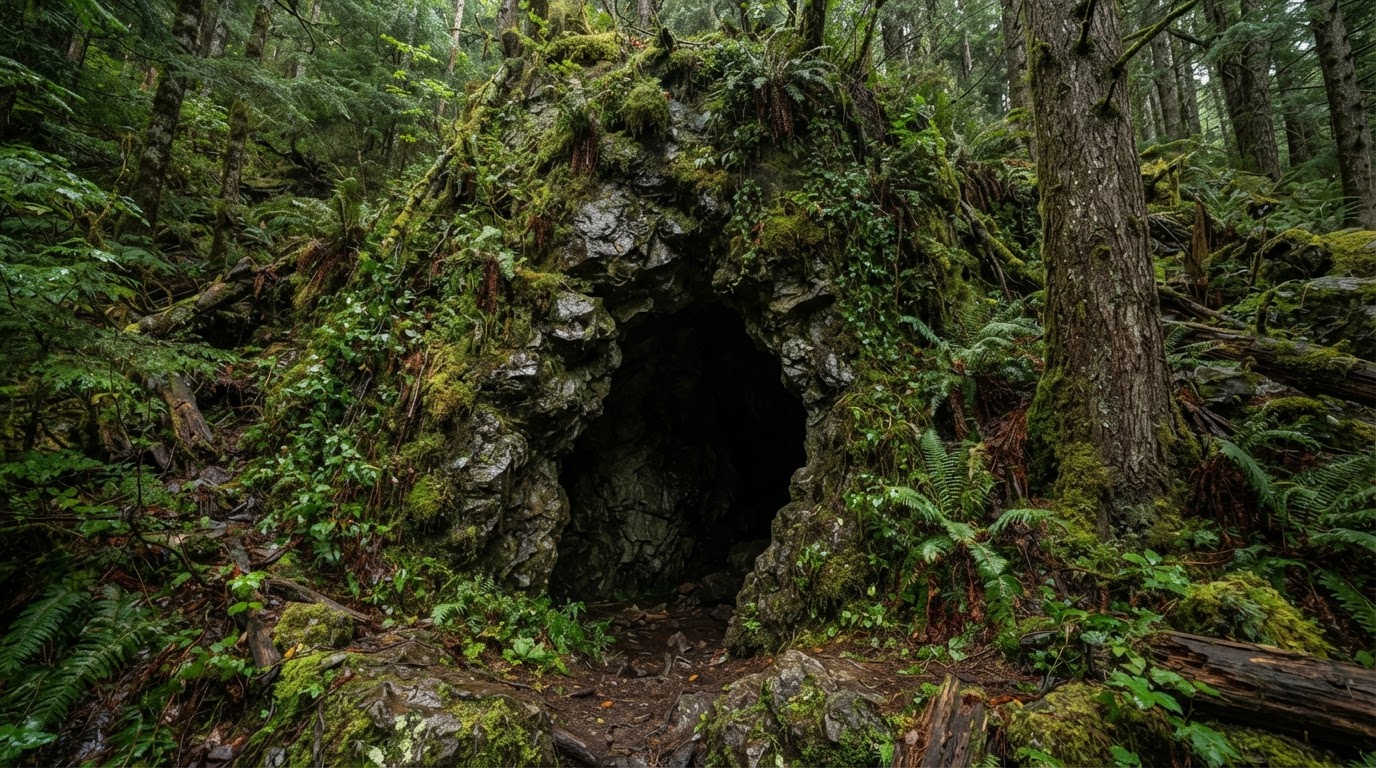
This part matters more than people realize, because you are journeying into Mother Earth herself, and that means you need a location that actually exists within her. It cannot be a place you dream up or imagine from nothing, and it cannot be something man-made.
I say this because I have had clients come to me confused about why they saw nothing in their journey, and when I ask what location they chose, the answer is something like a science center or a museum they enjoy visiting. That is not the natural world, and it will not work as an entry point. Your entry point needs to be a real, natural place on this planet, either somewhere you have actually been, or somewhere you have seen enough images of that you can visualize it accurately.
Good examples of entry points are caves, the hollow of a tree, or an opening at the roots of a tree. My own entry point is an oak tree right outside my front door. When I see that tree in journey, it grows enormous, and a hole opens up in its center. That is where I jump through to begin.
The Steps to a Successful Shamanic Journey
Step One: Get Comfortable. Find a position where you will not get a cramp or grow uncomfortable, whether that is lying down or sitting up. Physical discomfort can pull you right out of a journey, so take the time to settle in properly before you begin.
Step Two: Cover Your Eyes. Block out the light. This can be a proper eye mask, or something as simple as a shawl draped over your head. It does not need to be fancy, and not everyone needs it, but many people find it helps.
Step Three: Consider a Journey Blanket. Some people like to use a blanket set aside only for journeying, never used for anything else. It cocoons and comforts you, and over time it becomes a physical signal to your body that you are entering journey mode. The more you use it, the easier it becomes to drop into journey.
Step Four: Set Your Intent, Out Loud. Know exactly what you are going into this journey to do. Before you begin the music, say your intent out loud, in your own voice, with your own vibration. You will say it again once you are inside the journey, so this is the first of two times.
Step Five: Start Your Music. Turn on your drumming or rattling track.
Step Six: Visualize Your Descent. Nothing happens automatically just because the drum started. You have to visualize yourself traveling to your chosen entry point, going through your portal, and descending down into Mother Earth. Down, down, down, for as long as it takes. Sometimes it is a long journey down and sometimes shorter, but it should never feel like just two steps, and you have arrived. Keep going until you genuinely feel disconnected from the world above.
Step Seven: Arrive at the Waiting Place. Once you have gone all the way down, you arrive at a threshold space, the entry point to the spirit world itself. This looks different for everyone. One of my students sees a foyer, like the entrance to a house. For me, I do not walk down; I jump into my hole and fall, landing on what feels like a wooden stage. I can feel the thump of my feet hitting the wood. Everything around me is black, with a single spotlight on me. Whatever it looks like for you, this is your waiting place.
Step Eight: State Your Intent Again. This is the second time you speak your intent, this time to the spirit world itself. You are not saying it to a person standing in front of you, you are saying it into the space. This is my intent; this is what I am here to do.
Step Nine: Walk Forward. Up until now, everything has been visualized; you pictured your way from the middle world into the lower world. This is where the real journey begins. For me, the blackness around my stage starts to give way, almost like the start of a movie, and a scene begins to move. This is exactly where people make the mistake of stopping, treating it like a meditation and waiting for something to come to them. But you are not in a meditation; you are in a journey, which means you must keep walking. You are already in the spirit world, so nothing pulls you backward into another state, but if you never move forward, you get nothing; you stand there in the blackness. Keep walking until you meet a spirit, a place, or something that gives you a clear sense of, this is where I am supposed to be.
Step Ten: Have the Conversation. Once you arrive, interact. This is not a one-sided delivery; it is a conversation. If a spirit hands you something confusing, like an egg in answer to a question about your career, ask about it. Say, I do not understand, can you explain this differently, can you show me more? Sometimes the spirit will give you more detail. Sometimes spirits can be a bit difficult, and they will simply say, you figure it out, and walk away. It depends entirely on the spirit and the message. Either way, treat it as a real exchange, not a one-way delivery.
Step Eleven: Return the Way You Came. When you are finished, retrace your path. Walk back out of the spirit world, back to your waiting place or foyer, back up through your portal, back into the middle world, and back into your body.
Step Twelve: Always Set the Intent to Return. This one is a caution. You can journey as many times as you like, but you must set the intention to come back before you ever go in. This matters most for people in an escapist mindset when life feels hard, the journey-world feels bright and easy, and part of you does not want to leave. If you are journeying alone and never set the intent to return, and are not confident you can bring yourself back safely, you can get stuck. Stuck does not mean you never wake up; it means part of you comes back, and part of you does not.
If you are worried about this happening to you, do not travel alone. Ask someone trained in shamanic journey work to sit with you, so if you do not come back on your own, they can pull you back. I will tell you from experience: being pulled back feels like waking up with the worst hangover of your life; it is not pleasant. But it is far better than the alternative. If you are nervous about your first journey for this reason, consider booking a session with Raven, so she can guide you through the process safely.